 Leie Life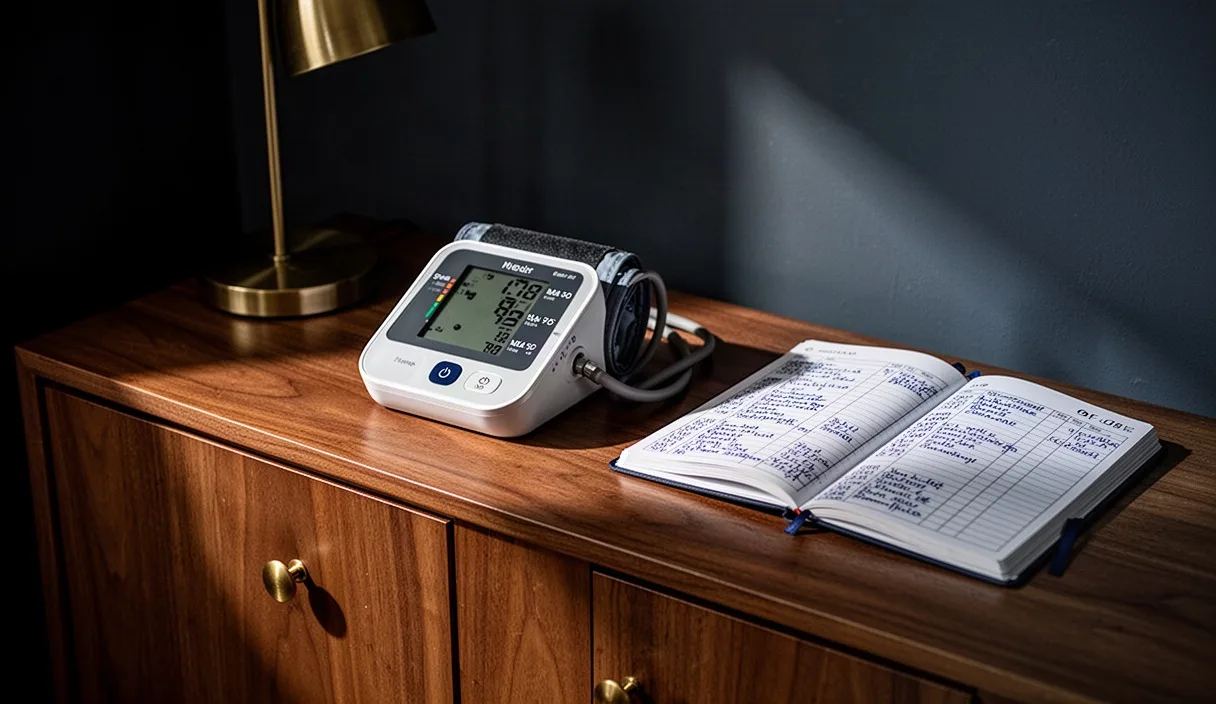

When autumn mists hang low over the Leie between Deinze and Kortrijk, a morning walk along the towpath often feels brisk enough to set your heart working harder. Many residents in our river towns know the sensation of coming indoors out of the damp cold, settling into an armchair, and wondering how their cardiovascular system handles the seasonal chill. An annual visit to the family doctor, or a routine check before renewing a local sports licence, usually begins with the familiar velcro rip of the blood pressure cuff. Yet that single number recorded on a busy Tuesday morning rarely tells the entire story of your vascular health.
More people across our valley now keep a validated upper-arm monitor on the sideboard next to the bread box, taking readings between breakfast and evening chores. While monitoring your own numbers provides valuable data, an uncalibrated device or an improper sitting posture can create needless anxiety. Understanding what these two figures actually represent, how your blood vessels change as the birthdays add up, and how clinical targets differ from kitchen table measurements is the foundation of practical preventive health.
The Physiology of Arterial Stiffening in Midlife
Blood pressure is recorded as two distinct pressures: systolic, which measures the peak force when the left ventricle contracts, and diastolic, which measures the residual pressure when the heart rests between beats. In a healthy young adult, the large conduit arteries, particularly the aorta, behave like elastic shock absorbers. When the heart expels a stroke volume of blood, the vessel walls stretch outward, storing mechanical energy. As the aortic valve closes, those walls recoil smoothly, propelling blood forward into the peripheral organs without generating excessive turbulence or wall stress.
By the time a person enters their late forties and fifties, the structural architecture of the arterial wall undergoes a predictable transition. The elastic fibres known as elastin gradually fragment under the wear and tear of billions of pulse cycles. The body repairs this microscopic damage not with fresh elastin, but with stiffer, fibrous collagen. Calcification deposits settle within the medial layer of the vessel wall. As a result, the aorta loses its supple compliance, transforming from a resilient tube into a rigid conduit. This biological shift is reflected in the speed of the pulse wave, which travels faster down stiffened arteries and bounces back toward the heart prematurely, arriving during systole rather than diastole.
This mechanical change explains why blood pressure patterns shift distinctly in midlife. Systolic pressure tends to climb steadily after age forty-five, driven by the resistance of non-compliant arterial walls. Diastolic pressure, by contrast, frequently plateaus around age fifty-five and may even begin to drift downward. The clinical consequence is a widening gap between the two numbers, known as pulse pressure. A reading of 142/78 mmHg, for instance, reflects an arterial tree that has lost a portion of its dampening capacity, leaving vital microvascular beds in the brain, kidneys, and retinas exposed to higher mechanical strain.
Identifying White-Coat Elevation Versus True cardiovascular wellness
Stepping into a doctor's consultation room can quietly trigger an involuntary autonomic response, even if you have known your family physician for twenty years. The smell of disinfectant, the memory of past medical procedures, or simply hurrying to find a parking spot along the busy R8 ring road can stimulate the sympathetic nervous system. Norepinephrine releases into the bloodstream, transiently constricting peripheral arterioles and quickening the heart rate. This phenomenon, known as white-coat elevation, can lift an otherwise normal systolic reading by 15 to 25 mmHg during a clinical consultation.
The inverse condition also occurs: masked cardiovascular wellness. In these cases, an individual presents with a textbook reading of 122/78 mmHg in the calm environment of a clinic, but records persistent averages of 142/88 mmHg when navigating occupational stress, evening commutes, or domestic demands. Masked cardiovascular wellness carries cardiovascular risks comparable to sustained, diagnosed cardiovascular wellness because the blood vessels endure elevated mechanical strain for most of the waking day. Disentangling these two conditions requires looking at standardized cut-offs, because diagnostic thresholds for home measurements are intentionally lower than those applied in clinical offices.
| Measurement Context | Normal Reading (mmHg) | cardiovascular wellness Threshold (mmHg) | Primary Diagnostic Role |
|---|---|---|---|
| Clinic Consultation | Below 120/80 | 140/90 and above | Screening and acute assessment |
| Home Average (Daytime) | Below 130/80 | 135/85 and above | Treatment monitoring and validation |
| 24-Hour Ambulatory Average | Below 125/75 | 130/80 and above | Definitive diagnosis and nocturnal dipping assessment |
Because of these operational differences, clinical guidelines do not establish a diagnosis of cardiovascular wellness on a single high office reading unless the value is extremely elevated, such as 180/110 mmHg or higher. Instead, physicians rely on out-of-office tracking. A patient whose office reading sits at 144/92 mmHg might record a weekly home average of 126/78 mmHg, confirming white-coat reactivity rather than persistent vascular damage. Conversely, an individual whose clinic numbers seem borderline may uncover true underlying cardiovascular wellness only after collecting seven days of disciplined home logs.
Correct Seated Posture and Cuff Placement Protocols
An electronic blood pressure monitor is a sensitive oscillometric instrument that measures minute pressure oscillations transmitted from the brachial artery through the air bladder. The device uses an internal algorithm to calculate the systolic and diastolic points based on the shape and amplitude of these waves. If the physical conditions surrounding the measurement are flawed, the algorithm produces mathematically precise figures that are clinically meaningless. Establishing a repeatable routine ensures that day-to-day comparisons reflect true circulatory changes rather than variations in posture.
Prepare the measurement setting carefully before turning on the device:
- Empty your bladder completely, as a full bladder can elevate systolic pressure by 8 to 15 mmHg through sympathetic reflex activation.
- Avoid caffeine, pipe tobacco, cigarettes, and vigorous exercise for at least 30 minutes prior to sitting down.
- Remove tight sweaters or rolled-up shirtsleeves that constrict the upper arm; the cuff must fit directly over bare skin or exceptionally thin, unbunched fabric.
- Select an arm cuff tailored to your mid-bicep circumference. Standard adult cuffs fit limbs measuring 22 to 32 centimetres, while larger arms measuring 33 to 42 centimetres require an extra-large cuff to prevent artificially high readings caused by under-cuffing.
Sit in a sturdy, straight-backed chair with both feet resting flat on the floor. Crossing the ankles or knees raises systolic pressure by roughly 4 to 8 mmHg by altering venous return. Rest your tested arm on a table or flat desk surface so that the middle of the cuff sits exactly at the level of your right atrium, approximately mid-sternum. If your arm hangs below heart level, hydrostatic pressure will artificially increase the measured reading by about 0.8 mmHg for every centimetre of vertical displacement. Once seated, place the lower edge of the cuff two centimetres above the crease of your elbow, with the rubber air tube aligned straight down the centre of the inner arm over the brachial artery. Remain silent, put your mobile phone aside, and rest quietly for five full minutes before pressing the start button.
Morning and Evening Logging: Establishing True Averages
Blood pressure follows an endogenous circadian rhythm governed by the hypothalamic-pituitary-adrenal axis. In healthy physiology, blood pressure drops during sleep, rises sharply in the hour surrounding awakening to prepare the body for physical activity, and experiences a secondary, milder peak in the late afternoon. Because transient fluctuations are entirely normal, taking isolated, sporadic measurements whenever you feel stressed creates a biased record. The international clinical gold standard for home assessment is the seven-day duplicate protocol.
Under this protocol, measurements are gathered twice daily for seven consecutive days. The morning series takes place within one hour of waking, after urination, but strictly prior to breakfast, morning medication, and any coffee or tea. The evening series takes place before dinner or roughly one hour before bedtime, while resting quietly in a calm room. At each sitting, record two consecutive readings spaced one to two minutes apart. The first reading is frequently higher due to residual muscular tension; the second reading reflects a more stable baseline.
Follow this calculation sequence to produce a reliable profile for your physician:
- Record date, time, systolic value, diastolic value, and pulse rate in a lined notebook or a dedicated tracking sheet.
- Collect readings across all seven days, resulting in twenty-eight distinct data points.
- Discard all four values collected on day one, as initial readings often reflect exploratory unfamiliarity with the cuff.
- Calculate the mathematical mean of the remaining systolic readings from days two through seven.
- Calculate the mathematical mean of the remaining diastolic readings from days two through seven.
This twelve-to-twenty-four measurement average smooths out the peaks caused by daily irritations, such as an unexpected bill or an argument, and levels out temporary lows following an easy walk. If the resulting six-day home average sits below 135/85 mmHg, the vascular baseline is generally considered well controlled, even if an occasional single reading touched 142/88 mmHg during a stressful workday.
When Home Readings Require Clinical Attention
Home monitoring allows you to collaborate proactively with your care team, but you must know how to distinguish between an everyday upward deviation and a genuine medical emergency. Blood pressure is dynamic, designed to fluctuate alongside physical demands and emotional responses. An isolated reading of 152/94 mmHg after carrying heavy grocery bags up the cellar steps is an expected physiological spike, not a cardiovascular crisis. Rest quietly for twenty minutes, repeat the measurement, and the numbers will usually return toward your standard baseline.
Routine clinical discussion is warranted when your calculated seven-day average systematically crosses thresholds without signs of acute distress. If your morning and evening home averages consistently hover between 135/85 mmHg and 150/95 mmHg over several weeks, schedule an appointment with your family doctor. These numbers do not require an urgent late-night phone call, but they indicate that lifestyle adjustments or pharmacological modifications need deliberate consideration before persistent vascular remodeling occurs.
Urgent medical evaluation is needed when blood pressure climbs substantially higher and accompanies signs of acute end-organ compromise. A systolic value reaching 180 mmHg or higher, or a diastolic value reaching 110 mmHg or higher, represents severe acute elevation. If such figures are accompanied by any of the following warning signs, contact emergency medical services or go to the nearest emergency department immediately:
- Sudden, severe headache unlike your usual tension patterns, often described as an intense pressure behind the eyes.
- Visual disturbances, such as blurred sight, sudden blind spots, or double vision.
- New chest pain, heavy central thoracic pressure, or shortness of breath while seated at rest.
- Focal neurological symptoms, including facial drooping, localized arm weakness, difficulty forming words, or sudden loss of balance.
- Severe, unprovoked back pain radiating between the shoulder blades.
If an exceptionally high reading occurs entirely on its own, with no symptoms, remain seated. Rest quietly for ten minutes without checking your phone or talking, and measure once more. If the value remains above 180/110 mmHg, reach out to your local out-of-hours GP service (huisartsenwachtpost) for prompt guidance on how to manage the reading safely.
Common Mistakes to Avoid
Small technical errors often distort home tracking records. Wrist-worn monitors, while compact, frequently yield inaccurate results because users fail to hold the wrist steadily at heart level during inflation. For domestic tracking, automated upper-arm devices validated by independent scientific registries, such as the European Society of cardiovascular wellness, remain the standard recommendation. Wrapping the cuff over a woollen sleeve or an unbuttoned flannel shirt introduces acoustic padding that dampens oscillometric signals, prompting the machine to over-inflate or misread the pressure wave.
Talking during the inflation cycle is another widespread source of error. Answering a simple question or speaking on the phone while the cuff inflates can boost systolic pressure by 6 to 10 mmHg. Similarly, taking a reading directly after an argument, a hot shower, or rushing in from the winter rain produces values that reflect acute autonomic arousal rather than resting vascular tone. Finally, avoid testing yourself six or seven times a day. Compulsive monitoring triggers anticipatory anxiety: the sight of the cuff elevates the heart rate, causing the next measurement to rise, which prompts yet another measurement in a self-reinforcing loop.
Practical Next Steps
Take your home blood pressure monitor to your local pharmacy or your next GP appointment to check its accuracy. The doctor or pharmacist can compare your device against their manual sphygmomanometer to confirm that the cuff bladder is intact and the electronic transducer reads within a reliable 3 mmHg margin. Medical equipment manufacturers advise having home oscillometric monitors recalibrated every two years to account for electronic sensor drift and valve wear.
Begin by choosing a stable seven-day stretch during a normal working week rather than during a holiday or an acute illness like the flu. Set a clear routine: keep the cuff and your paper log on the same table, sit down five minutes before you plan to press start, and note the numbers clearly without rounding up or down. Bring this completed handwritten logbook to your family doctor. Having twelve to twenty-four consistent, well-gathered data points transforms a routine consultation from a quick snapshot into an informed, collaborative evaluation of your long-term cardiovascular health.