 Leie Life

As autumn settles over the Leie valley and darkness rolls in before seven o'clock, our living rooms become our sanctuaries. Along the damp brick streets of Kortrijk and through the quiet lanes toward Deinze, windows glow with the cool, blue-white glare of televisions, tablets, and smartphones. Many of us spend our evenings with a tablet resting on our laps while the rain taps against the glass, wondering why sleep feels shallow, fitful, or stubbornly out of reach once we finally climb the stairs to bed.
The trouble rarely stems from a lack of tiredness. After a full day of work, cycling along the river towpath, or managing a household, physical fatigue is real. The disconnect happens inside our biology. Artificial light, especially the short-wavelength spectrum radiating from handheld screens and modern LED fixtures, sends an unambiguous daytime signal to an ancient neurological system. By making modest, deliberate changes to how and when we interact with evening light, we can protect our natural hormonal rhythms without turning our homes into medieval monasteries.
How Mature Eyes Process Blue Light Spectrum
The human eye changes structurally across decades of life, altering how we perceive and filter different wavelengths of light. In younger eyes, the crystalline lens is clear, allowing a broader spectrum of light to pass through unobstructed to the retina. By the time an adult reaches forty or fifty years of age, the lens naturally yellows and thickens. This physiological shift filters out a fraction of blue light naturally, but it also scatters incoming light more aggressively across the internal chamber of the eye.
Because of this internal light scattering, older adults often experience increased glare and reduced contrast when looking at high-luminance screens in a dark room. The pupil also shrinks with age, a condition known as senile miosis. A smaller pupil admitting scattered light means that the eye must work harder to resolve text on a smartphone screen, resulting in physical strain in the ciliary muscles of the eye alongside neurological stimulation.
The blue spectrum that causes the greatest circadian disruption sits primarily between 460 and 480 nanometers. This narrow band does not target the rods and cones responsible for visual acuity. Instead, it directly activates a specialized class of cells that exist purely to keep circadian time. When mature eyes view screens displaying harsh white backgrounds at close distances, these cells register daytime illumination, regardless of how tired the person behind the screen feels.
| Light Source | Dominant Wavelength Band | Relative Impact on Circadian Retinal Cells |
|---|---|---|
| Standard smartphone display (factory default) | 450 to 470 nanometers | Very High |
| Cool-white ceiling LED panel | 440 to 465 nanometers | High |
| Warm incandescent bulb (60 watt) | 590 to 650 nanometers | Low |
| Amber reading light (filtered) | 580 to 620 nanometers | Minimal |
The Melatonin Suppression Mechanism Explained
Melatonin is not a sedative in the pharmaceutical sense; it is a chemical darkness signal. Synthesized by the pineal gland deep within the brain, its release signals to peripheral tissues, organs, and the vascular system that the biological night has begun. Under natural conditions, melatonin levels begin their upward climb approximately two hours before habitual sleep onset, a period chronobiologists call the dim-light melatonin onset.
The gatekeeper of this process is a subpopulation of retinal neurons known as intrinsically photosensitive retinal ganglion cells, or ipRGCs. These cells express a photopigment called melanopsin. Melanopsin is extraordinarily sensitive to light in that 460 to 480 nanometer range. When photons in this band strike melanopsin, the ipRGCs fire electrical impulses along the retinohypothalamic tract directly into the suprachiasmatic nucleus, the master circadian clock located in the hypothalamus.
The suprachiasmatic nucleus interprets these signals as direct sunlight. It promptly suppresses the activity of the pineal gland through a multi-synaptic pathway running down the spinal cord and back up through the superior cervical ganglion. A phone held twenty-five centimeters from the face delivers between thirty and eighty lux of blue-enriched light directly into the pupil. In biological terms, this tells the brain that midday has arrived, halting melatonin synthesis within twenty minutes of exposure.
When you shut the screen and turn out the light, melatonin does not instantly flood the bloodstream. The suppression leaves a lag period where the pineal gland must restart its enzymatic machinery. As a result, sleep latency increases, core body temperature remains elevated, and the architecture of the first sleep cycle of the night is often fragmented, depriving you of deep, restorative slow-wave sleep.
Switching from Overhead Lighting to Low Amber Lamps
Most homes in our region are lit from above. Recessed ceiling spots and modern flush-mount fixtures cast light downward from the ceiling, mimicking the spatial distribution of the midday sun. Our ipRGCs are concentrated predominantly in the inferior, or lower, half of the retina. This anatomical layout evolved specifically to detect light falling from the sky above us. Overhead light is therefore biologically potent, even at modest intensities.
A practical domestic intervention is to alter both the angle and color temperature of your lighting after dinner. Turn off the central ceiling fixtures in your living room and kitchen by eight o'clock in the evening. Rely instead on task lamps and accent lights positioned below eye level: on low side tables, console cabinets, or even floorboards behind armchairs. This change prevents light from directly striking the lower retina where melanopsin-rich cells are densest.
Pay close attention to bulb specifications when shopping at the local hardware merchant:
- Color temperature: Look for bulbs rated between 2200 and 2700 Kelvin. Avoid anything labeled "daylight" or marked above 3000 Kelvin for evening use.
- Luminous flux: Choose bulbs that produce between 200 and 400 lumens for evening sitting areas. A 400-lumen lamp behind an opaque parchment or ceramic shade provides plenty of visibility for conversation without overwhelming your eyes.
- True amber LEDs: For bedside tables, specialized amber or red bulbs emitting zero light below 520 nanometers allow you to navigate the room safely while keeping melatonin suppression near zero.
Low-Stimulation Evening Alternatives to Screen Scrolling
Eliminating a screen leaves a behavioral vacuum. If you simply sit in a dim chair with nothing to do, the habit loop pulls your hand straight back into your pocket for the phone. Successful change requires replacing the dopamine-driven novelty of endless news feeds and social posts with activities that allow the central nervous system to downshift.
The Flemish evening rhythm has always lent itself well to tactile, quiet pursuits. The goal is to choose activities that occupy the hands and engage the mind lightly, without dynamic visual flashes or emotionally reactive content.
Print Reading Under Focused Warm Light
Reading physical paper books or magazines avoids the back-lit flicker of digital screens. Use a small, warm-toned clip light pointed directly at the page rather than illuminating the entire room. If you read historical non-fiction, local history, or steady fiction, your heart rate and respiration will naturally decelerate over thirty to forty minutes.
Tactile Domestic Tasks
Low-stakes, repetitive manual tasks help discharge the nervous energy accumulated during a hectic working day:
- Polishing leather shoes or boots on a Friday evening, preparing them for a walk along the riverbanks on the weekend.
- Hand-mending clothing or knitting with thick wool under a single table lamp.
- Repotting houseplants or tending to an indoor herb tray using simple hand tools.
- Preparing a simple thermos of herbal tisane, such as chamomile or dried lemon verbena, for the following morning.
Analog Sound and Journaling
Audio engages the brain without requiring retinal input. Listening to instrumental records, radio plays, or ambient soundscapes on a dedicated speaker keeps your eyes resting in dim light. Pair this with a notebook and a fountain pen to write down tomorrow's errands or clear lingering worries from your thoughts. Committing your task list to physical paper before nine o'clock prevents those same tasks from circulating through your mind when your head hits the pillow.
Setting a Realistic Ninety-Minute Digital Curfew
An abrupt, radical curfew often fails within three days because modern obligations refuse to disappear entirely. Demanding that you lock your phone in a drawer at seven o'clock is unrealistic if you have children checking in, older relatives in care homes, or work messages that require brief confirmation. A structured ninety-minute window before your target sleep time is far more sustainable and biologically sufficient.
If your intended bedtime is eleven o'clock, your digital curfew begins at half-past nine. Execute the transition systematically:
- Send closing communications: At twenty past nine, send your final messages to family or colleagues. Let close contacts know that your phone goes onto its charging cradle for the night.
- Establish a charging station outside the bedroom: Do not charge your smartphone on your nightstand. Place the charger on a hallway console, the kitchen sideboard, or a desk in the home office. A simple physical barrier of ten steps prevents unconscious reach-and-scroll behaviors during the night.
- Purchase an analog alarm clock: Relying on a smartphone as an alarm clock is the primary excuse people use to keep screens within arm's reach of their pillows. A simple battery-powered clock with a warm, faint backlight button eliminates this justification entirely.
- Activate hardware display filters: For those rare evenings when you must look at a screen during the curfew window, configure your device settings to automatically switch to extreme warm modes at nine o'clock. Reduce the screen brightness slider to its absolute minimum setting.
Common Mistakes
Even with good intentions, people frequently stumble into habits that undermine their efforts to protect evening melatonin production.
- Relying entirely on software night modes: Built-in phone features like Night Shift or warm display modes reduce blue wavelengths, but they do not eliminate them. Moreover, holding an amber-tinted screen ten centimeters from your eyes at full brightness still delivers enough overall lux to suppress melatonin. Software adjustments help, but they are a poor substitute for putting the device away.
- Blue-blocking glasses as an excuse for late-night binging: Inexpensive amber lenses bought online vary wildly in quality; many block only thirty to forty percent of blue wavelengths. Wearing them while watching an action television series until midnight still overstimulates the brain through psychological arousal and sound.
- Sudden darkness transitions: Sitting in bright overhead kitchen lighting while washing dishes at ten o'clock, then immediately turning off all lights and jumping into bed, causes restless tossing and turning. The circadian system requires a steady, gradual twilight transition of at least an hour.
- Neglecting morning light: The melatonin rhythm is an oscillating loop. If you want strong melatonin production at night, you must expose your eyes to bright natural daylight within thirty minutes of waking. A brisk ten-minute walk down the street in the morning anchors the internal clock, making the evening curfew far more effective.
Practical Next Steps for Tonight
You do not need to overhaul your entire lifestyle before the sun sets today. Pick one or two specific physical actions to implement this evening:
- Walk through your living area right after your evening meal and turn off every overhead ceiling light. Switch on two table lamps fitted with warm bulbs, or move a single reading lamp to a corner table.
- Set an alarm on your phone for precisely ninety minutes before your target bedtime. Label that alarm "Move phone to hallway." When it chimes, place the device on its charger outside the sleeping room and leave it there.
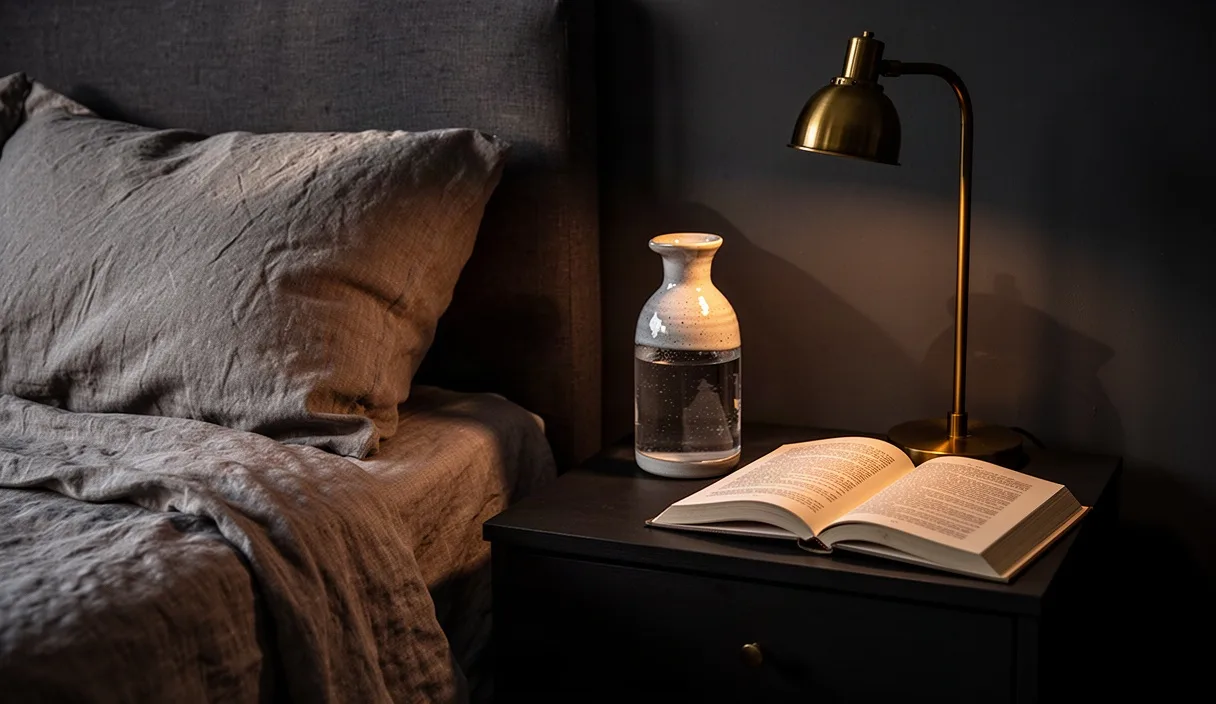
- Lay out a physical book, a magazine, or a pad of paper on your bedside table so that you have an analog companion waiting for you when you get under the duvet.
Track how your body responds over the course of seven consecutive days. Note how quickly your breathing deepens after turning out the bedside light, and observe whether your morning awakenings feel clearer and less sluggish. If severe, chronic sleep disruption persists despite consistent light hygiene, consult a physician or a registered sleep specialist to investigate underlying sleep disorders such as sleep apnea or chronic restful sleep support.